Overview
Albion has been organizing trips to Peru since 2004. The trip focuses on the Sacred Valley of the Incas and Machu Picchu. We offer a two-day visit to Machu Picchu, which gives you the opportunity to get to know the sacred site in more detail. Important information – the number of tickets is limited, only up to 400 people are allowed in each day, so if you plan to come, we recommend registering early so as not to miss out on tickets!
This trip can be extended by adding Easter Island.
Highlights
- Plane tickets
- Meals specified in the program
- transportation according to the program
Itinerary
Meeting at Tallinn Airport at 05:30.
Flight BT857 Tallinn-Amsterdam 07.30-09.00 (Air Baltic)
Flight KL743 Amsterdam-Lima 09.55-15.25 (KLM)
We arrive in Peru in the afternoon of the same day. Transfer to the hotel. Evening at leisure.
Accommodation: Lima Jose Antonio Hotel 4*
After breakfast, we will take a tour of Lima, a modern city full of contrasts, culture and hustle and bustle. Founded in 1535 by the conquistador Francisco Pizarro, the South American capital of the Spanish Empire, Lima, the City of Kings, has exploded into the most populous region of Peru with nearly 10 million inhabitants. Here you will find beautiful colonial villas, ruins of pre-Inca cultures, historic churches and excellent museums full of priceless treasures.
The historic center of the city was inscribed on the UNESCO World Heritage List in 1991, and its heart is the Plaza Mayor, where, despite the earthquakes that have devastated the city over the centuries, the imposing Lima Cathedral, the Palacio de Gobierno (the presidential residence), the Palacio Arzobispal (the archbishop's residence) and much more stand tall. We visit the church and monastery of San Francisco.
Then we will visit the LARCO Archaeological Museum, which is located in an 18th century viceroyalty mansion, surrounded by beautiful gardens. The Larco Museum has an amazing display of up to 5,000 years of Peruvian history and development, giving a good overview of the pre-Columbian era in Peru. We will also see a remarkable collection of ancient Peruvian gold, silver, and ceramics from the Mochica culture.
Meals: breakfast
Accommodation: Lima Jose Antonio Hotel 4*
This morning we visit the Gold Museum. Peru has been a land rich in gold since ancient times. The vast amount of this shiny and tarnish-resistant metal has been both a source of wealth for Peru and a source of much mischief. Miguel Gallo founded the Gold Museum as a representative private museum, the collection of which is a tribute to the brilliant knowledge and skills of Peru's ancient goldsmiths. Before our eyes, we will see vaults with death masks, crowns, nose rings and earrings, necklaces, helmets, ceremonial figurines and knives made of gold, silver and even platinum. The museum's collection also includes "hats" made of human hair, ceramics, mummies, ponchos made of feathers, etc. On the upper floor of the museum is Armas Del Mundo - a magnificent display of various weapons and military equipment from around the world.
In the afternoon, we fly from the capital Lima to Cusco.
The evening is for acclimatization. Cusco is located at 3400m above sea level.
Meals: breakfast
Accommodation: Cusco Yawar Inka Hotel 3*
Today is a day to explore Cusco and its surroundings. We will visit the ruins of Puca-Pucara, Kenko and Tambomachaya. Then we will visit the famous fortress of Sacsayhuaman.
Let's take a closer look at the area around Cusco. The mountainous Cusco, which has now become the tourist capital of Peru, was once the royal capital of the Incas. From here, the fertile Cusco Valley became the birthplace of the largest pre-Columbian empire in the New World in the 12th and 13th centuries. The royal dynasty of the Incas usurped all the surrounding tribes by bribing, intimidating, negotiating, or simply enchanting them. The capital of the ancient Inca empire, which stretched from Colombia to Chile, was captured by Spanish conquistadors in 1532, leaving only the foundation walls of the city. In accordance with the custom of the conquistadors, cathedrals, monasteries, and palaces were built on them. A striking example of Inca architectural art is the basic plan of the city of Cusco and the foundation walls that have withstood countless earthquakes. Inca engineers had long known that earthquake-resistant walls could be built using dowel joints with an accuracy of a fraction of a millimeter.
The hillsides surrounding the city of Cusco are home to thousands of mighty Inca ruins. New archaeological finds are constantly being discovered, helping to piece together, stone by stone, the mosaic of the enigmatic Inca civilization buried in the darkness of history. The gigantic megalithic stone walls of the Sacsahuaman fortress, charged with cosmic energy, in which some of the nearly 350-ton boulders have withstood wars, earthquakes and time. Puca-pucara means "Red Fortress" in Quechua and is a good example of ancient Inca military architecture. The Kenko sanctuary, or huaca, consists of various tunnels and a cave in which a sacrificial altar is located. In the sacred place of the Inca water cult, Tambomachay, a natural spring was tamed so that it formed a series of springs. Here, more than anywhere else, the Inca's innate ability to build in harmony with the surrounding nature is visible.
In the afternoon we will explore the city of Cusco. The main square of Cusco, Plaza de Armas, was the ceremonial “warrior square” of the Incas, where the festivals of the Sun were celebrated and their rulers were honored. The unique jewel of Cusco is the Church of Santo Domingo, which was built on the ruins of the Inca Temple of the Sun (Koricancha). Only legends tell of the incredibly brilliant and magnificent temple of the Incas: in honor of the Sun god Inti, the walls of the temple were covered with pure gold and full of precious stones, in the garden there were life-size statues of animals made of gold and silver, and here the royal mummies of the Incas watched over their people during ceremonies. The conquerors carried away the gold and much of it is still being searched for.
Meals: breakfast
Accommodation: Cusco Yawar Inka Hotel 3*
Today we have a day off for vacation.
Those who wish can hike (for an additional fee, 160usd) to Rainbow Mountain :
Early in the morning we start the drive to Cusipata (81 km, about 1.5 hours), from where we continue for about 25 kilometers (also 1.5 hours) along an unpaved road in the middle of a canyon, surrounded by high boulders. Then we reach the starting point of our hike at an altitude of 4630 meters, where we have breakfast before the hike. We start walking under the leadership of a local guide, who also introduces us to the surrounding areas - the hiking trail passes through farmlands, small villages and alpaca herds. We have wonderful views of the 6384-meter-high Ausangate mountain and other snow-capped peaks. We have enough time to take pictures and enjoy the views of the surrounding Red Valley. The Red Valley is known as the "brother" of Rainbow Mountain, but it is less known and therefore visited by fewer tourists. When we reach the end of the valley, we are at the foot of Rainbow Mountain. We climb to the top of the mountain, where from an altitude of 5100 meters we have a magnificent 360-degree panoramic view of the colorful slopes of Vinicunca (Rainbow Mountain in Estonian). On one side are the snowy peaks of Ausangate and on the other side are the rainbow-colored slopes of Vinicunca. After taking pictures and enjoying the magical views, we begin our descent to the parking lot, where we have lunch. Then we drive back to Cusco, where we arrive at approximately 5 pm.
When going on a hike, you need to take into account the physical strain and the fact that the temperature at such altitudes (Cusipata 3330 m, the beginning of the hike 4630 m and the end of the hike 5100 m) changes quickly, and you need to be prepared for all kinds of weather - sun, rain, and snow.
Meals: breakfast
Accommodation: Cusco Yawar Inka Hotel 3*
Today we drive around the Sacred Valley of the Incas. The Incas considered the Urubamba River region an earthly paradise, and its generous nature was their granary and source of wealth. The ancient farmers skillfully mastered high-altitude farming. They grew more than 70 different local crops on terraced fields and stored five years' worth of grain in giant warehouses for years of famine.
In the difficult conditions of the mountain village of Pisac, the Incas were able to build a fortress, dwellings, temples to the Sun and Moon, and impressive terraced fields high on a mountaintop. Inca engineers connected disjointed road sections into a single, complete network, thus uniting their vast empire.
The journey continues to the beautiful village of Maras, located at an altitude of 3,028 meters, where the Inca nobles lived. Here we see the salt mines that brought wealth to the Incas, some of which are still in operation today.
Then we head to the ancient Inca fortress city and sanctuary of Ollantaytambo. Named after an ancient hero, the inhabitants of this town carry on ancient Quechua traditions. Walking the cobblestone streets of the town, built in a chessboard pattern, peeking into hidden courtyards and climbing the fortress walls, we can feel like we are traveling back in time.
Meals: breakfast, lunch
Accommodation: Urubamba San Agustin Hotel 3*
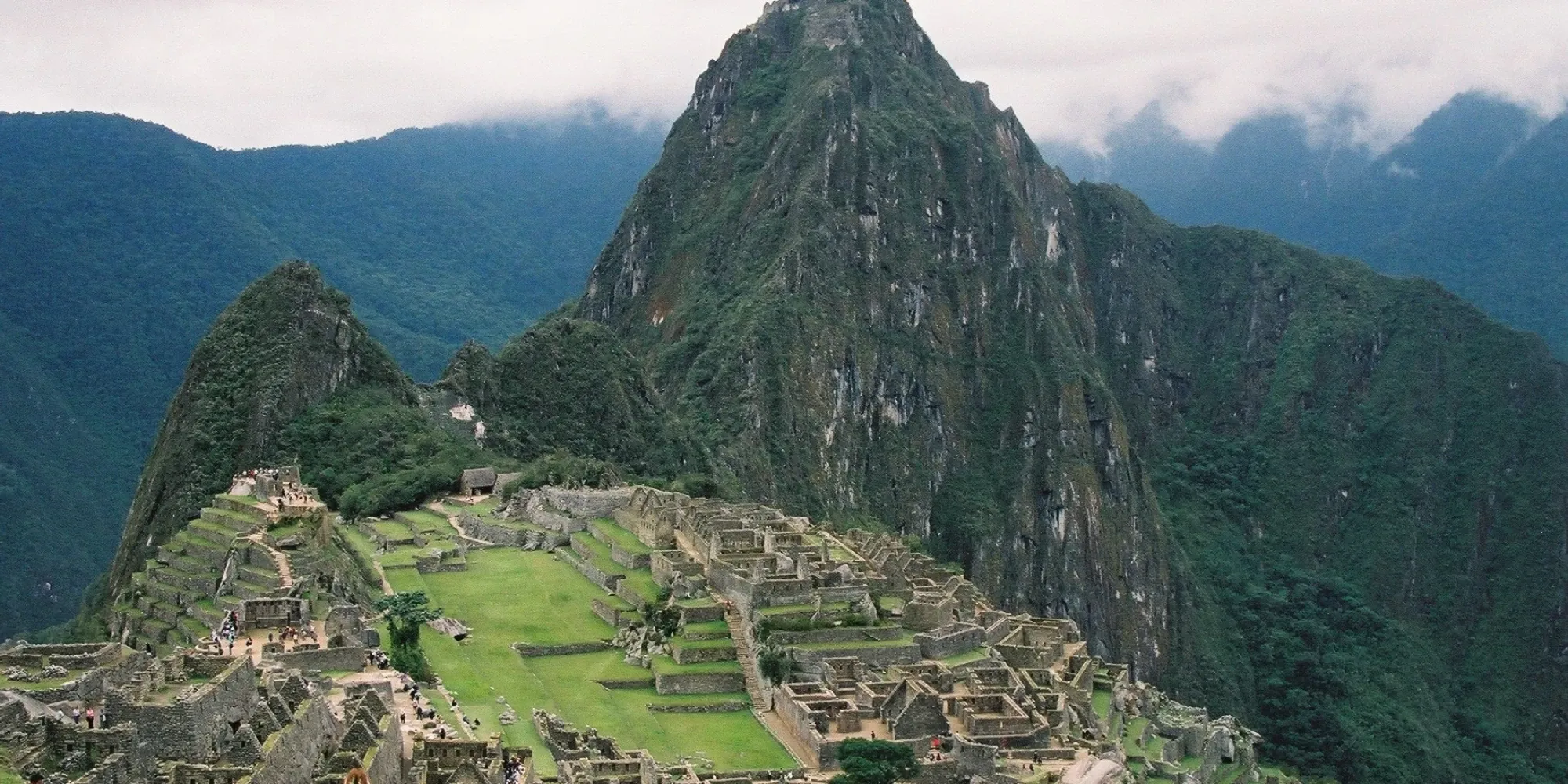
After breakfast we take the train (1.5 hours) to Aguas Calientes, also known as Machu Picchu Pueblo. This town is hidden between the mountains and is the last stop before moving on to the world-famous ruins. The town is full of hotels, nice cafes and countless souvenir stalls. From Machu Picchu Pueblo a short bus ride takes you up the serpentine mountain to the Machu Picchu ruins.
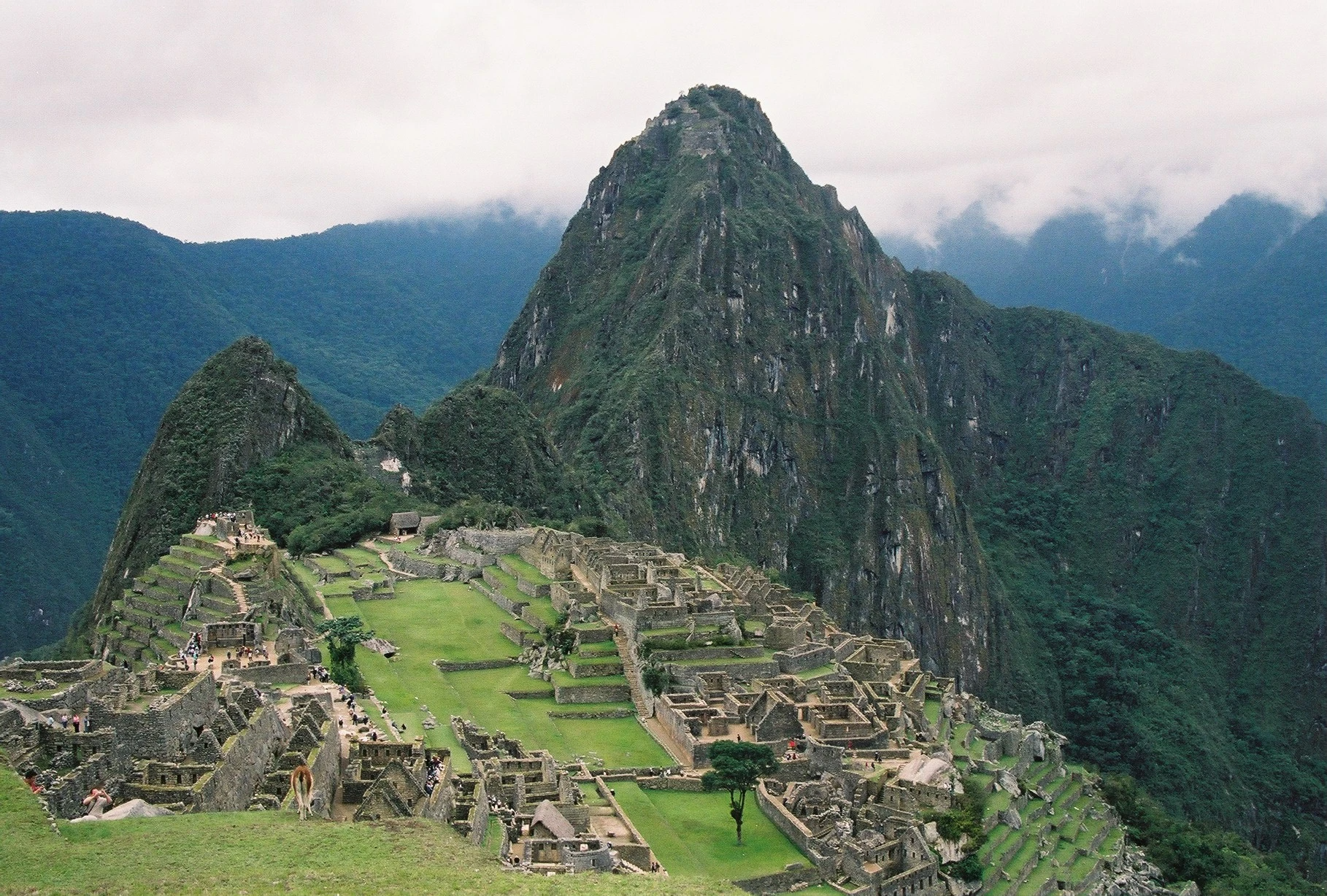
The 2,350-meter-high rock city of Machu Picchu takes its name from the mountainside on which it is built. There is nothing more sublime than beginning to glimpse the outlines of the ancient city as the morning mist begins to slowly unfurl from the majestic Machu Picchu peak. The place is magically peaceful, secluded, and meditative - a contrast to the motley international crowd that has come here to visit one of the seven wonders of the modern world. First-time and repeat visitors alike are captivated by the mystique of this masterpiece of nature and man.
Machu Picchu was only discovered for the Western world in 1911 by Hiram Bingham, when nature had completely claimed it for itself. The art of Inca stoneworking has withstood time, powerful destructive forces of nature and human activity. The true purpose of the city and the reason why it was once abandoned by the Incas still remain a mystery. Experts speculate that the site may have been a place of worship for the gods, where the movement of the stars was observed, or that it was the country villa of the ninth Inca ruler, Pachcutec. Usually, you only spend four hours at the ruins of Machu Picchu, with tourists arriving by train from Cusco at 11 a.m., and all of them leaving for Cusco by train at 3 p.m. Our great advantage is that we stay here for the whole day. What a mystical feeling it is here, when you suddenly find yourself almost alone in the ancient center of the Inca Empire.
NB! We will be going to Aguas Calientes with backpacks, we will pick up the large suitcases again the next day in Cusco.
Meals: breakfast
Accommodation: El Mapi Inkaterra Hotel 3* in the town of Aguas Calientes, at the foot of Machu Picchu
This morning we will use the afternoon to visit Machu Picchu again. This will give you a great opportunity to explore the mysterious places of Machu Picchu with a tour guide (or on your own). Early in the morning we will also have the opportunity to go to Huayna Picchu, from where you will have completely new views of the entire surroundings.
In the afternoon we take the train to Cusco.
Meals: breakfast
Accommodation: Cusco Yawar Inka Hotel 3*
In the morning we fly from Cusco to Lima.
Free time in Lima, which has a large concentration of world-class restaurants!
In the evening we drive to the airport to start our journey back home.
Flight AF501 Lima-Amsterdam 20.10-14.05+1
Meals: breakfast
Flight BT860 Amsterdam-Tallinn 16.45-20.05
Cost
The package includes:
- plane tickets
- accommodation in a double room as specified in the program
- meals specified in the program
- excursions and entrance fees as indicated in the program
- transportation according to the program
- Estonian-speaking tour guide services
The Cost Excludes
- accommodation in a single hotel room
- visas and documents required for border crossing, if necessary
- travel insurance
Important information
- plane tickets
- accommodation in a double room as specified in the program
- meals specified in the program
- excursions and entrance fees as indicated in the program
- transportation according to the program
- Estonian-speaking tour guide services
For an additional fee:
- accommodation in a single hotel room
- visas and documents required for border crossing, if necessary
- travel insurance
After booking the trip, we will send you an advance payment invoice, upon payment of which we will confirm your place in the travel group. The advance payment is 1000 euros per traveler. The advance payment will be deducted from the total cost of the trip. We will generally send the final invoice 60 days before the start of the trip. Depending on the specifics of the trip, we may submit additional invoices from the moment of booking the trip under the conditions set out in the travel description – for example, if there is a need to purchase flight tickets earlier, pay for accommodation services, etc.
The amount refunded in the event of a trip cancellation therefore depends on the expenses already incurred for the trip at the time of cancellation. If the traveler cancels the trip more than 60 days before the trip, we will refund the advance payment, minus the office costs (service fee) of 250 euros and, depending on the situation, other non-refundable expenses already incurred for the trip (e.g. flight tickets). If there are 60 days or less until the trip, the advance payment is non-refundable.
Changes to the travel program
As a tour operator, we do our best to ensure that the trip takes place exactly as promised. However, the implementation of the travel program also depends on circumstances that are beyond the control of the tour operator. The tour operator therefore has the right to make changes to the program without prior notice, such as changing the destination or hotel (ensuring the same or better standard as possible), both before and during the trip. We will do this if it is necessary or unavoidable for reasons beyond our control. Please read Albion Travel’s travel conditions: https://albion.ee/reisitingimused.
NB! Entry requirements may change rapidly. We will send a separate detailed overview to all registered travellers. Each traveller must ensure that their certificates, documents, etc. are valid and meet the requirements of the transit and destination country. Albion will provide information, but as conditions may change rapidly, the final responsibility for compliance with the conditions remains with each traveller. Additional information on entry requirements can be found on the Ministry of Foreign Affairs’
Travel Smart page.
It is the traveler’s responsibility to check with due diligence that the risks that are important to them are adequately insured throughout the trip. Therefore, we ask every traveler to take out the necessary travel insurance for themselves.
Albion cooperates with Salva Kindlustus. The advantage of taking out Salva travel insurance through us is that in the event of an insured event, we, as the tour operator, can submit the necessary documents directly to the insurance company, and the claim handling process is significantly easier, faster and paperless for the traveler. We recommend taking out travel insurance at the time of booking the trip.
When taking out travel insurance, we pay attention to the importance of trip interruption insurance – if the trip is cancelled due to illness or some other insured event, for example, then the travel insurance will cover the cost of the trip up to the amount of the trip interruption. As a tour operator, we often see cases where the travel interruption amount of the travel insurance included with the traveler’s credit card is not sufficient for this (as a rule, it is a maximum of €2,000). In order for the travel insurance to also cover trip cancellations due to natural disasters, civil unrest or strikes, additional trip interruption protection should be ordered separately in addition to the travel insurance.